Why PPE Comfort Is a Safety Issue, Not a Luxury
When people talk about PPE, the focus is usually on protection and compliance. However, one critical factor is often ignored: comfort.
Uncomfortable PPE directly affects how consistently workers wear it. In long industrial shifts, comfort is not a matter of personal preference—it is a vital part of practical safety.
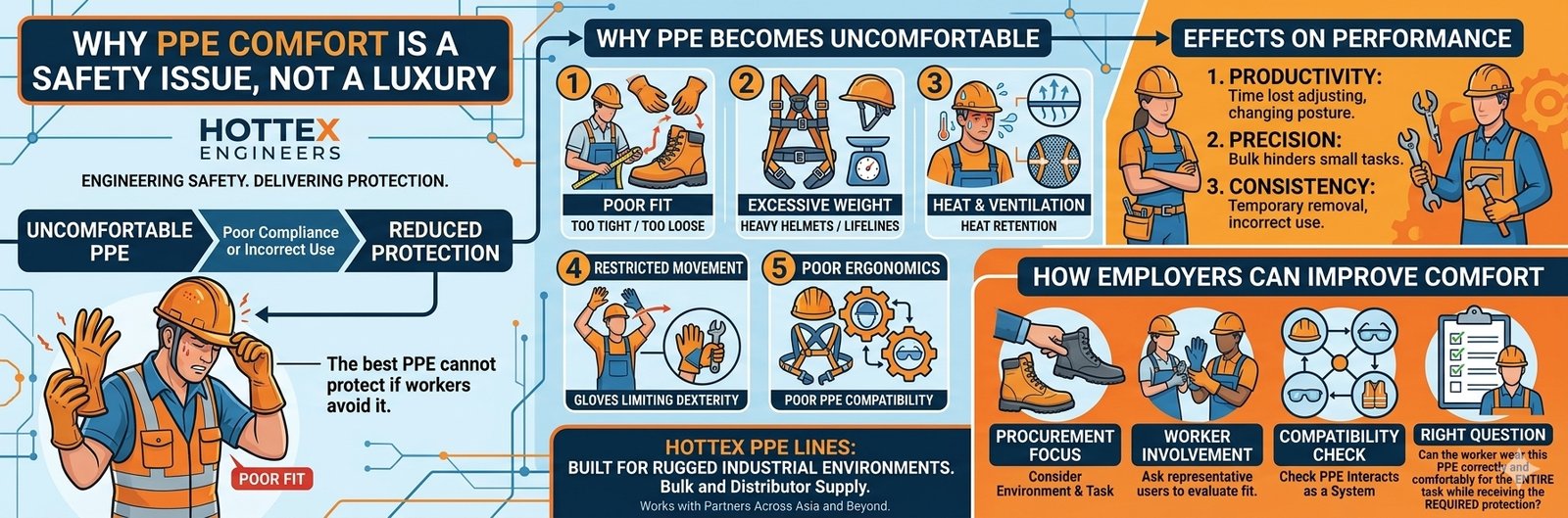
The Safety Chain: Uncomfortable PPE → Poor Compliance → Reduced Protection
Why Does PPE Become Uncomfortable?
- Poor Fit: Equipment that is too tight creates pressure points, while loose gear slips out of position.
- Excessive Weight: Heavy helmets, footwear, or harnesses cause muscle fatigue over long hours.
- Heat Retention: Non-breathable materials trap body heat, accelerating exhaustion.
- Restricted Mobility: Bulky gear limits movement, making detailed tasks harder to perform.
Comfort Does Not Mean Less Protection
Modern safety engineering balances Protection + Fit + Comfort + Mobility. The goal is to make the required protection practical enough to be used correctly throughout the entire task.
How Employers Can Improve PPE Comfort
- Assess the Environment: Consider shift durations, humidity, and dexterity needs upfront.
- Involve Workers: Let users test samples for fit and movement before placing large bulk orders.
- Look Beyond Price: Cheap, uncomfortable PPE leads to low compliance and frequent replacements.
The Right Question to Ask: "Can the worker wear this PPE correctly and comfortably for their entire shift while receiving the full required protection?"